
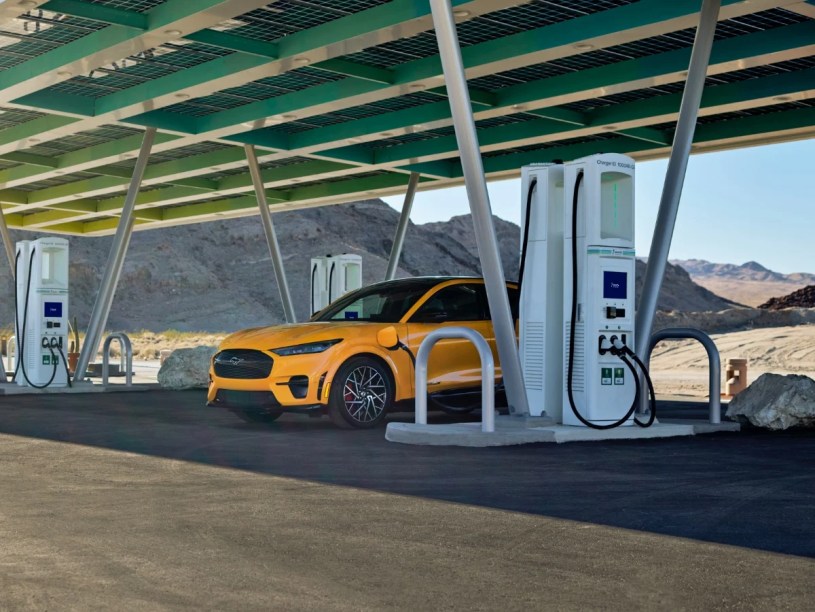
Imagine you’re on a road trip, cruising down the highway, when your EV’s battery indicator starts flashing. Do you opt for a Level 2 AC charger and grab a coffee while it powers up, or do you head straight to a DC fast charging station for a rapid energy boost? Understanding the key differences between these two charging methods can help you make smarter decisions about EV charging, whether for daily use or long-distance travel.
AC vs. DC Power – The Basics
Before diving into the differences between DC fast charging solutions and AC fast charging solutions, let’s clarify how EV charging works.
- Alternating Current (AC): Standard electricity in homes and workplaces, requiring conversion before an EV can store it in its battery.
- Direct Current (DC): The form of electricity batteries use. DC fast charging stations send DC power directly to the battery, bypassing the onboard charger for rapid energy transfer.
The difference in how these power types are delivered is the foundation of how Level 2 AC and DC fast charging stations operate.
Level 2 AC Charging – Everyday Convenience
Level 2 AC charging is the most common method for home, workplace, and public charging. It’s ideal for daily use, ensuring your EV is topped up overnight or while parked at work.
🔹 Voltage: 230V-400V
🔹 Power Output: 3.7 kW to 22 kW
🔹 Charging Speed: Adds 40-50 km of range per hour
🔹 Best Use Cases: Home garages, shopping centers, office parking lots
Why Choose Level 2 AC Charging?
- Cost-effective – Lower electricity rates and minimal infrastructure requirements.
- Convenient – Ideal for overnight charging and regular daily top-ups.
- Widely available – Installed at workplaces, malls, and residential complexes.
For urban EV users with predictable daily commutes, Level 2 AC charging is the most practical solution.
DC Fast Charging Station– Speed & Long-Distance Travel
DC fast charging solutions solve one of the biggest concerns in EV adoption: time. By delivering power directly to the battery, DC fast charging stations significantly reduce charging time.
🔹 Power Output: 50 kW to 400 kW
🔹 Charging Speed: Adds 100 km of range in under 10 minutes
🔹 Best Use Cases: Highways, fleet operations, time-sensitive refueling
Why Choose DC Fast Charging Solutions?
- Ultra-fast – DC fast charging stations can charge an EV up to 80% in 30 minutes or less.
- Essential for long trips – Cuts down charging time for highway travelers.
- Critical for fleets – Maximizes uptime for commercial EVs.
While DC fast charging solutions are a game-changer for long-haul driving, they come with higher costs and infrastructure requirements, making them ideal for commercial hubs and major highways.
Which One Should You Choose?
| Factor | Level 2 AC Charging | DC Fast Charging |
| Charging Speed | Slower (40-50 km/hour) | Much faster (up to 300 km in 30 min) |
| Cost | Less expensive | More expensive |
| Availability | Widespread in homes & workplaces | Common along highways & commercial hubs |
| Best For | Daily commutes, home/work charging | Long-distance travel, fleets, quick top-ups |
Conclusion – Making the Right EV Charging Choice
Both Level 2 AC charging and DC fast charging solutions serve distinct purposes in the EV ecosystem. Level 2 AC charging is perfect for everyday use, offering affordability and convenience, while DC fast charging stations enable rapid charging for long-distance travel and commercial operations.
For EV owners, the choice often depends on lifestyle and driving needs. A combination of both—using Level 2 AC charging for routine refueling and DC fast charging for quick top-ups on the go—creates the most efficient charging strategy.
 A-To-Z Car Blog