
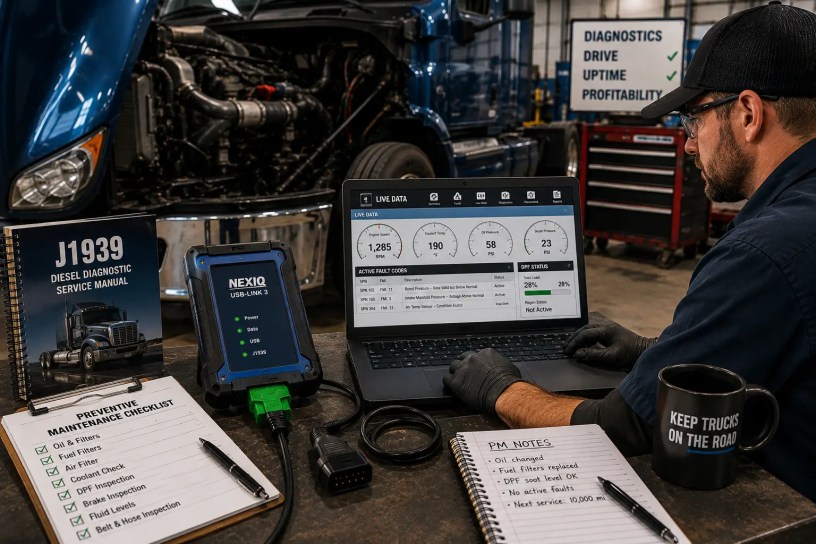
Taking a heavy-duty diesel truck in for service is a different experience from a routine passenger car oil change. The vehicles are more complex, the diagnostic equipment is more specialized, the service intervals involve more variables, and the cost of getting it wrong is significantly higher. Whether you own a single work truck or manage a small fleet, understanding what proper heavy-duty truck service looks like — and what to expect from a qualified shop — helps you make better decisions and avoid being overcharged or underserved.
Here is what every diesel truck owner should know before walking through the service bay door.
Not Every Shop Is Equipped for Heavy-Duty Diesels
The first thing to understand is that heavy-duty diesel trucks require specialized equipment, tooling, and training that most general automotive shops do not have. A Class 6, 7, or 8 truck communicates over a J1939 data bus rather than the OBD-II protocol used by passenger vehicles. Reading fault codes, performing forced regenerations on diesel particulate filters, programming replacement modules, and calibrating aftertreatment sensors all require manufacturer-specific or commercial-grade diagnostic platforms — tools that cost tens of thousands of dollars and require ongoing subscription fees and technician training.
A shop that primarily services cars and light trucks may accept your heavy-duty truck and attempt repairs — but without the right diagnostic tools, they are working partially blind. Misdiagnosis on a diesel truck is expensive. You may pay for parts and labor that don’t fix the problem, then pay again when a qualified shop correctly identifies the root cause.
Before booking a heavy-duty truck service, ask the shop directly: What diagnostic software do you run for heavy-duty diesels? Do your technicians hold ASE Medium/Heavy Truck certifications? Do you have experience with my engine make — Cummins, Detroit, PACCAR, International? A qualified shop will answer these questions without hesitation.
What a Proper Diesel Service Inspection Should Cover
A thorough heavy-duty truck service — whether a scheduled preventive maintenance visit or a diagnostic appointment for a reported issue — should systematically address the major systems that affect reliability and compliance. Here is what to expect from a professional service:
- Engine: Oil and filter change at manufacturer-specified intervals. Oil condition inspection for signs of coolant contamination, metal contamination, or excessive blow-by. Inspection of belts, hoses, and accessory drive components.
- Fuel system: Fuel filter replacement per interval. Water separator drain. Visual inspection of fuel lines and connections for leaks or chafing.
- Cooling system: Coolant condition test for freeze protection and SCA (supplemental coolant additive) levels. Radiator and charge air cooler inspection for debris or damage. Thermostat and pressure cap function check.
- Aftertreatment system: DPF soot load check. DEF quality and level inspection. NOx sensor function check. Active or parked regeneration as needed. SCR catalyst condition assessment.
- Brakes: Brake lining thickness measurement across all axles. Air system pressure buildup and governor cut-in/cut-out check. Air dryer function. Slack adjuster inspection.
- Tires: Tread depth measurement. Inflation pressure check and adjustment. Visual inspection for sidewall damage, uneven wear patterns, and valve stem condition.
- Lights and electrical: Full lighting check including marker lights, brake lights, and turn signals. Battery voltage and charging system output test.
A shop that completes a full service without touching the brakes, tires, or aftertreatment system has left significant ground uncovered — and those are the systems most likely to generate roadside failures or out-of-service violations.
Understanding Diagnostic Charges
One area that often surprises first-time heavy-duty truck service customers is the diagnostic charge. Unlike a passenger car where a quick scan of fault codes might cost $50 to $100, heavy-duty diesel diagnostics can run $150 to $300 or more per hour — and complex issues may require several hours of diagnostic time before a root cause is confirmed.
This is not a shop padding its invoice. Heavy-duty diagnostic work requires expensive software subscriptions, manufacturer-specific interfaces, and technicians with specialized training. When a fault code points to an aftertreatment issue on a late-model Cummins or Detroit engine, properly diagnosing whether the problem is a sensor, a dosing injector, an SCR catalyst, or an ECM calibration issue requires methodical testing that takes time.
A professional diesel engine diagnostics workflow follows a systematic process — reading active and inactive fault codes, reviewing freeze frame data, performing component-level tests, and verifying the repair after the fix. That process protects you from expensive misdiagnosis and repeat visits.
Ask upfront what the diagnostic fee covers, whether it applies toward the repair cost if you proceed, and what the shop’s policy is if the first diagnosis turns out to be incomplete.
How to Read a Service Quote
When a shop presents a repair or service quote for a heavy-duty truck, you should expect itemized pricing that separates parts, labor, and any sublet work. Here is how to evaluate what you’re looking at:
- Labor rates: Heavy-duty shop labor typically runs $95 to $175 per hour depending on location and specialization. Rates below this range may indicate a shop lacking proper tooling or training. Rates above it are not unusual in high-cost markets or for highly specialized work.
- Parts: Ask whether the quote uses OEM parts, remanufactured components, or aftermarket alternatives — and for which items. On emissions-related components (DPF, injectors, turbochargers), OEM or quality remanufactured parts generally produce better outcomes than low-cost aftermarket substitutes.
- Warranty: A reputable shop will warrant both parts and labor. Standard commercial truck repair warranties run 90 days to 12 months on parts and labor. If no warranty is offered, ask why.
Building a Long-Term Relationship With the Right Shop
For truck owners and fleet managers, the most valuable asset in the service relationship is consistency. A shop that knows your truck’s service history, understands its common fault patterns, and has records of every repair and PM visit can diagnose problems faster, catch developing issues earlier, and manage your maintenance costs more effectively than a rotating cast of unfamiliar facilities.
This is why the best fleet operators treat their diesel service provider less like a vendor and more like a partner. They communicate proactively about symptoms before they become breakdowns, share maintenance history when switching providers, and maintain their own records in parallel with what the shop keeps.
Following a structured heavy duty truck preventive maintenance schedule is the foundation of that relationship — it gives both you and your shop a clear framework for what needs to happen, when, and why. Trucks that arrive at the shop on schedule for planned services cost less to maintain than trucks that show up unexpectedly with breakdowns.
The Bottom Line
Heavy-duty diesel trucks are significant investments, and the service decisions made over their operating life determine whether they deliver their full value or generate constant, avoidable cost. Choosing the right shop, understanding what proper service looks like, knowing how to read a quote, and maintaining consistent records are not complicated — but they require more engagement than a passenger car service relationship typically does.
The truck owners and fleet operators who get the most from their equipment are the ones who treat service as a managed process, not a reactive expense.
About the Author:- Michael Nielsen is the editor and publisher of Heavy Duty Journal, a free digital trade publication serving diesel technicians, fleet managers, and owner-operators in the commercial trucking industry. He brings 15+ years of hands-on experience in diesel repair and fleet operations to HDJ’s editorial coverage.

