
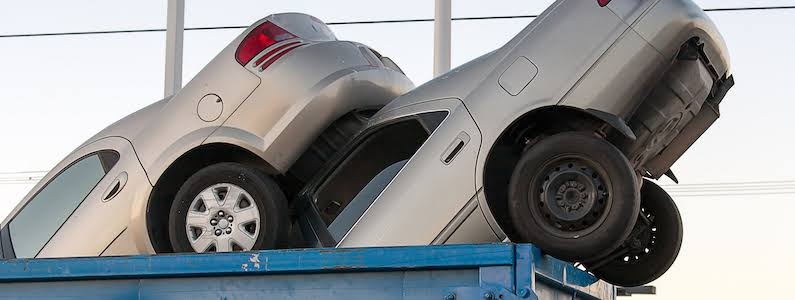
Singapore is one of the few places in the world where a car’s residual value at end-of-life is a significant financial figure worth understanding and planning around. The scrap value of car in Singapore is not determined by what the metal is worth. It is determined primarily by two government-administered rebates, the PARF rebate and the COE rebate. Getting these right is the difference between walking away from a scrapping transaction with a strong return and discovering too late that a different timing or approach would have returned considerably more.
Most Singapore car owners understand in general terms that a PARF rebate exists but few know the precise calculation. The result is that many owners accept the first dealer quote they receive without the ability to verify whether it accurately reflects what they are owed.
Breaking Down the PARF Rebate
The Preferential Additional Registration Fee (PARF) rebate is a refund of a portion of the ARF paid when the vehicle was first registered in Singapore. The ARF itself is a tax on vehicle registration, calculated as a percentage of the Open Market Value of the car. For most standard passenger vehicles, the ARF represents a significant sum.
The PARF rebate is returned at the following rates depending on the vehicle’s age at de-registration:
- Less than 5 years old: 75% of ARF paid
- 5 to 6 years old: 70% of ARF paid
- 6 to 7 years old: 65% of ARF paid
- 7 to 8 years old: 60% of ARF paid
- 8 to 9 years old: 55% of ARF paid
- 9 to 10 years old: 50% of ARF paid
- Over 10 years old: 0% (no PARF rebate)
The implication of that final tier is significant. The scrap value of car in Singapore drops sharply at the ten-year mark. An owner who de-registers their vehicle one month before the ten-year anniversary recovers the full PARF rebate. An owner who de-registers one month after recovers nothing in PARF.
The COE Rebate
The COE rebate represents the pro-rated remaining value of the Certificate of Entitlement at the time of de-registration. The calculation uses the current Quota Premium (QP) for the relevant COE category, not the original premium paid when the car was purchased.
For cars purchased during periods of lower COE premiums that are now being scrapped when premiums are higher, this calculation works in the owner’s favour. For the reverse scenario, it reduces the rebate. The current QP is published by LTA and is publicly verifiable.
Additional Value Factors
Beyond the PARF and COE rebates, several factors can add incremental value to the scrapping transaction. Vehicles in better mechanical condition, with recent service history and low mileage relative to age, may attract slightly better offers because serviceable components have secondary market value.
Vehicles with recent tyre replacement, intact interior fittings, and functioning electrical systems are similarly valued slightly higher than stripped or damaged equivalents. These factors are modest relative to the rebate values for vehicles still within the PARF window, but can add a meaningful amount for post-PARF vehicles where the component value matters more.
Maximising Returns Through Timing
The most powerful lever for maximising the total car scrap value is the timing of de-registration relative to the PARF tier boundaries. An owner who identifies that their car will drop to the next PARF tier within the next few months has a clear financial incentive to act before that drop occurs.
The secondary timing consideration is the COE rebate calculation. De-registering closer to the mid-point of the COE period, when significant time still remains on the certificate, returns more in COE rebate than waiting until the certificate is nearly exhausted.
For Singapore car owners who want to understand the full scrap value of car calculation, verify that the dealer quote they receive is accurate, and time the de-registration decision for maximum financial return, taking fifteen minutes to understand the PARF and COE rebate framework is the single most valuable preparation they can make.

